
An interview with Nick Brown,
Chief Executive Officer
at Lloyd’s Register
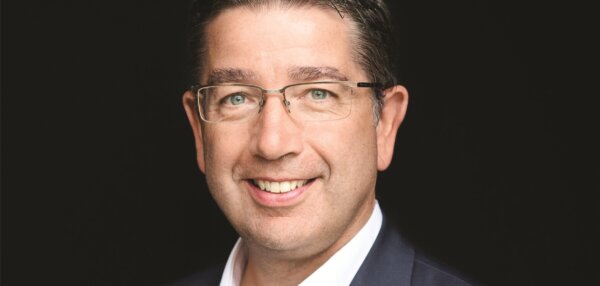
We shine a spotlight on a valued partner of APEX Shipping & Energy Ltd., offering an opportunity to learn more about the people and organisations that are part of our professional journey. We are pleased to welcome Mr Nick Brown, Chief Executive Officer of Lloyd’s Register, who shares insights from his remarkable 30-year career, his vision for the future of shipping, and his perspectives on safety, digitalisation, decarbonisation, and the evolving role of maritime professionals.
To start with, could you briefly introduce yourself to the APEX family – both our seafarers and shore-based teams – and share a few words about your journey in the maritime industry?
I was brought up on a small family farm in Lincolnshire, where my interest in engineering began. Initially, I did not envision a career in shipping. However, a chance encounter with a Lloyd’s Register (LR) surveyor in 1990 was the starting point of my career. After completing a degree in Mechanical Engineering at Nottingham University, I started as a graduate trainee in 1996, so this year marks my 30th year with Lloyd’s Register (LR).
My early years were spent as a ship surveyor in Bahrain, Dubai, Finland and Germany. I then progressed into product development and segment management roles before relocating to China in 2006 to lead our commercial team at the outset of the expansion of Chinese shipbuilding and repair.
Two years later, I took on responsibility for the entire LR Business activity in China before returning to London in 2013 as the Global Director for Business Development and Innovation. This was followed by the role of Marine and Offshore Director in 2016.
My appointment as the CEO of LR was one of the proudest moments of my life. I assumed the role in January 2021 with the ambition of helping to create a safe, sustainable, and thriving ocean economy. My focus is on enhancing our clients’ performance, safety, and sustainability through trusted advice and expertise.
I am also privileged to serve on the Supervisory Board of the UK Chamber of Shipping and the Advisory Council of the Global Maritime Forum.
Having joined LR in 1996 and served as CEO since January 2021, what are the most important lessons you have drawn from your 30-year journey?
The most significant lesson is that this industry is built on trust and relationships. Everything we do, whether on board, in offices, or in shipyards, depends on people trusting one another to do the right thing. Policies and titles do not build this trust; it is built through consistency, presence, and an understanding of the realities of working at sea.
I have also seen firsthand the incredible wealth of passion and professionalism across the shipping industry. I have met seafarers, superintendents and engineers all over the world who are generous with their knowledge and proud of what they do. That willingness to share experience and help others is one of the industry’s greatest strengths.
Shipping has always been inherently cautious. Safety is of great importance, but over the last decade, I have witnessed rapid change. New fuels, new technology, new regulations, and people have always stepped up. When crews and teams are given the right support, they adapt far more quickly than we sometimes give them credit for.
Above all, I have learned that long-term success depends on people working as a team with a clear sense of direction and purpose. This industry advances only through collective effort.
With your extensive experience at LR and your engagement with IACS, how do you see the role of classification societies evolving today, and how might it differ in the years ahead?
When I first joined LR, classification was often seen as “the rulebook” and a mechanism for compliance checks. Safety remains the core, but what shipowners and managers need from class today is far broader and more practical.
Decarbonisation and digitalisation are no longer abstract concepts; they show up in checklists, bunkering plans, voyage decisions, reporting requirements and, importantly, crew workload. Classification societies are increasingly expected to act as trusted advisers, supporting operators in navigating regulations, adopting new technologies safely, and making informed decisions based on evidence and data.
This is why LR has invested in tools that make life simpler and safer for crews and shore-based teams. Through the acquisitions of Ocean Technologies Group (OTG) and OneOcean, we have strengthened fleet management and voyage compliance solutions, which now support more than 30,000 vessels worldwide. As the future of shipping depends on people as much as on steel, we also support the training and certification of over 1,000,000 seafarers, representing around half of the global seafaring workforce. I take great pride in that.
Looking ahead, we will be asked to address matters that are still new to many of us, such as alternative fuels, carbon capture, AI and autonomous systems. While safety and trust through standards will always be our foundation, our scope will continue to broaden, connecting assets, people, technologies and regulations. This role will increasingly encompass aspects that affect day-to-day operations on board, ensuring that change is introduced safely and in a way that our crew can live with.
What keeps you busy as the CEO of LR?
A lot of my time is spent asking a straightforward question: Are we helping operators and crews in ways that bring them tangible benefits day to day? Whether it is classification, digital services like OneOcean, or advisory work, our work must translate into safer decisions, smoother compliance and fewer surprises at sea.
I also try to stay close to the industry, talking with shipowners, ship managers, regulators and seafarers. These conversations are so important. They tell you where the pressure points are: workload, inspections, new reporting requirements, new fuels, and the realities of running ships on tight schedules.
We can take a longer-term view because Lloyd’s Register is owned by Lloyd’s Register Foundation, an independent charitable organisation that uniquely positions us to balance commercial objectives with a genuine sense of societal responsibility. That independence helps us reinvest in research, safety and capability – work that ultimately feeds back into protecting people and supporting better operations across the industry.
Reflecting on your career, is there a defining moment or experience during your time at LR that has had a lasting impact?
The formative years of my career spent surveying ships have had a lasting impact on my professional outlook. Six years working in and around dry docks in the Middle East, often conducting up to 50 special surveys and dockings per year, provided a rigorous and practical education. During this time, I developed a clear understanding of what constitutes effective maintenance, where risks tend to arise, and the extent to which success depends on careful planning and strong collaboration between ship and shore.
Moving to China in 2006 was another significant moment. The pace was incredible; newbuilds, repairs, growth everywhere. Helping LR invest and scale there, while supporting the wider development of maritime capability, shaped how I think about long-term partnerships: you do not build resilience with quick wins; you build it by showing up consistently and investing in people and skills.
How do you anticipate the daily working life of seafarers and shore-based professionals to evolve in the coming years?
The working environment in the shipping industry is undergoing a period of rapid transformation, the effects of which are already being widely experienced across the sector. New fuels, digital systems and automation are no longer ideas for the future; they exist in everyday operations.
With the increasing adoption of fuels such as ammonia, hydrogen, and methanol across the global fleet, crews will need extensive training to safely manage the unique operational and safety challenges each fuel presents.
That is exactly why our Decarbonisation Hub, a partnership between Lloyd’s Register Foundation and Lloyd’s Register Group, is focusing on establishing clear standards for effective training. A core element of this work is supporting the Maritime Just Transition Task Force (MJTTF), which is helping develop practical competency frameworks and safety protocols that can be integrated into company training academies and safety management systems.
At the same time, digitalisation is changing how ships are operated and supported from shore. There is more data, increased reporting requirements and greater regulatory pressure than ever before. If people are not properly supported, digital tools can quickly feel like an additional burden rather than something that makes the job easier.
This is one of the key reasons we have invested in practical digital training and support through OneOcean and OTG. These platforms are not solely designed to meet compliance requirements; they also support crews and shore-based teams in becoming more confident in using digital tools, interpreting data, and incorporating digital workflows into day-to-day decision-making.
As an industry, we must recognise that shipping has not always invested sufficiently in recruitment, training and retention. If we expect people to operate new fuel systems and manage increasingly complex digital reporting, this must be supported by adequate training time, effective tools and clearly defined career pathways.
Ultimately, digitalisation and decarbonisation will only work if people are given the time, training and support to adapt. Technology on its own will not make shipping safer or more efficient. Real progress comes from continued investment in skills, confidence and career development for both seafarers and shore-based crew.
From your perspective, what factors will define a successful shipping company in the energy transportation sector over the next decade?
Operators that succeed will be those that effectively integrate safety, the intelligent use of digital tools, and strong capability both on board and ashore. If any one of these elements falls behind, overall performance will suffer.
Digital maturity will be a key differentiator. Leading companies are ensuring that fleet and voyage data are not only collected but also effectively utilised to support maintenance planning, voyage compliance, port planning, and fuel-efficiency decisions. When implemented effectively, this reduces last-minute pressure and enables crews to focus on safe operations.
We are also likely to see increased use of advanced analytics and artificial intelligence to identify risks at an earlier stage, whether in relation to fuel performance, machinery trends, or safety indicators. However, technology delivers value only when implemented with the end user in mind. If it increases workload without a clear benefit, it is unlikely to achieve sustained adoption.
In conclusion, companies that invest consistently in their people and are prepared to adapt early will lead. This includes upskilling seafarers and shore-based teams to manage new fuels, strengthening cyber awareness, and fostering a culture in which lessons are shared openly. If this is achieved, the industry will be better positioned to set the pace for a stronger and more sustainable maritime sector, capable of responding effectively to the challenges and opportunities ahead.